Google A2A Protocol in 2026: Adoption, Hype, and Reality
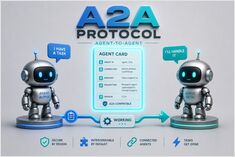
A2A is not dead. It is just not universal.
Google’s Agent2Agent protocol, usually shortened to A2A, had a strange first year.
A2A is not dead. It is just not universal.
Google’s Agent2Agent protocol, usually shortened to A2A, had a strange first year.
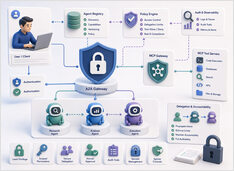
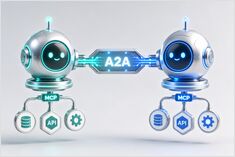
MCP gives agents tools. A2A gives agents peers.
AI agent architecture is starting to split into two layers.
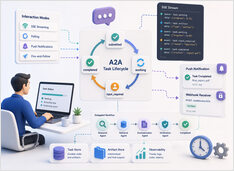
A2A turns agents into network peers.
The A2A Protocol, short for Agent2Agent Protocol, is an open standard for communication between independent AI agent systems.
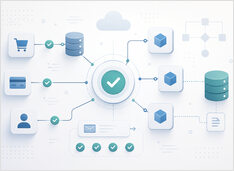
Stop duplicate side effects
Idempotency in distributed systems is the property that saves you after the network lies, the queue retries, the client panics, and the operator hits replay. In production systems, duplicate delivery is normal. Duplicate side effects are the bug.
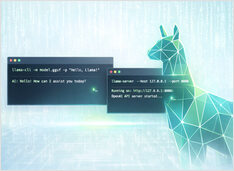
Serve and swap LLMs without restarts.
For a long time, llama.cpp had a glaring limitation:
you could only serve one model per process, and switching meant a restart.
Self-hosted AI search with local LLMs
Vane is one of the more pragmatic entries in the “AI search with citations” space: a self-hosted answering engine that mixes live web retrieval with local or cloud LLMs, while keeping the whole stack under your control.
What actually happens when you run Ultrawork.
Oh My Opencode promises a “virtual AI dev team” — Sisyphus orchestrating specialists, tasks running in parallel, and the magic ultrawork keyword activating all of it.
How to Install, Configure, and Use the OpenCode
I keep coming back to llama.cpp for local inference—it gives you control that Ollama and others abstract away, and it just works. Easy to run GGUF models interactively with llama-cli or expose an OpenAI-compatible HTTP API with llama-server.
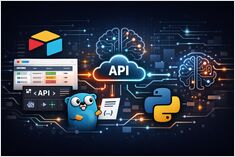
Airtable - Free plan limits, API, webhooks, Go & Python.
Airtable is best thought of as a low‑code application platform built around a collaborative “database-like” spreadsheet UI - excellent for rapidly creating operational tooling (internal trackers, lightweight CRMs, content pipelines, AI evaluation queues) where non-developers need a friendly interface, but developers also need an API surface for automation and integration.
Comparison of Chunking Strategies in RAG
Chunking is the most under-estimated hyperparameter in Retrieval ‑ Augmented Generation (RAG): it silently determines what your LLM “sees”, how expensive ingestion becomes, and how much of the LLM’s context window you burn per answer.
Selenium, chromedp, Playwright, ZenRows - in Go.
Choosing the right browser automation stack and webscraping in Go affects speed, maintenance, and where your code runs.
Python browser automation and E2E testing compared.
Choosing the right browser automation stack in Python affects speed, stability, and maintenance. This overview compares Playwright vs Selenium vs Puppeteer vs LambdaTest vs ZenRows vs Gauge - with a focus on Python, while noting where Node.js or other languages fit in.
January 2026 trending Go repos
The Go ecosystem continues to thrive with innovative projects spanning AI tooling, self-hosted applications, and developer infrastructure. This overview analyzes the top trending Go repositories on GitHub this month.
Master PDF text extraction with Python
PDFMiner.six is a powerful Python library for extracting text, metadata, and layout information from PDF documents.
Master browser automation for testing & scraping
Playwright is a powerful, modern browser automation framework that revolutionizes web scraping and end-to-end testing.
Type-safe LLM outputs with BAML and Instructor
When working with Large Language Models in production, getting structured, type-safe outputs is critical. Two popular frameworks - BAML and Instructor - take different approaches to solving this problem.