
Hardware

How to Pick an Uncensored LLM: Abliterated vs Fine-tuned

How to Pick an Uncensored LLM: Abliterated vs Fine-tuned

Pick an uncensored model: cost, fit, tool calls.

“Uncensored” covers three 2026 methods for open models that do not refuse: abliteration, refusal-free finetunes, and steerable policy. Each changes different capabilities; this guide compares costs and shortlists by VRAM.
Run Qwen3.8-Flash-Next Locally with Strata: 64 GB Quickstart

Run Qwen3.8-Flash-Next Locally with Strata: 64 GB Quickstart

125B MoE on one consumer GPU — and where 3-bit breaks

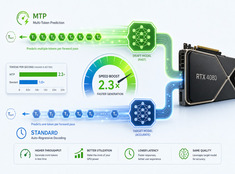
Qwen3.8-Flash-Next (QFN) has 125B total parameters, 6B active per token, and a native 256K context window. It has thinking enabled by default and records the highest agentic-coding benchmarks in its local-model class.

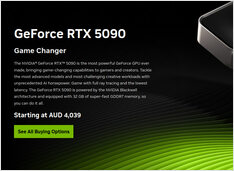
RTX 5090 Price in Australia: Listings and History

RTX 5090 Price in Australia: Listings and History

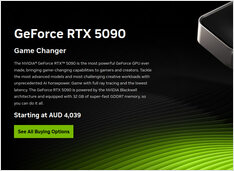
Dated Australian prices for the RTX 5090 and 5080.

On 29/10/2026 the cheapest in-stock RTX 5090s averaged A$12,249, and the RTX 5080s averaged A$2,832. A shop with no card in stock is left out of the average.

KV Cache on 16 GB GPUs: Making Long Context Actually Fit

KV Cache on 16 GB GPUs: Making Long Context Actually Fit

Why 128K context dies on 16 GB

A model can advertise a 128K context window and still fail at 40K tokens on a 16 GB GPU. The architecture ceiling never promised that weights, KV cache, compute buffers, and the desktop compositor would fit on your card at the same time.

Data Gravity: The Real Cost of API-First AI

Data Gravity: The Real Cost of API-First AI

Why your AI stack gets stickier every month.

Every API call feels like a simple transaction - until enough of them accumulate that your fine-tuning data, evaluation harnesses, and tool schemas are all shaped around one vendor, and switching stops being a routing change.

GPUs for AI in 2026: NVIDIA, AMD, Intel Compared

GPUs for AI in 2026: NVIDIA, AMD, Intel Compared

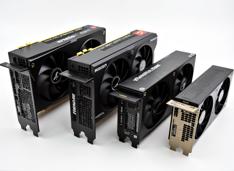
AI GPU comparison across three vendors

The AI hardware landscape has shifted significantly in 2026, with NVIDIA, AMD, and Intel all competing for developers who need GPUs capable of running local large language models and AI inference workloads.