
Go Error Handling Architecture: Boundaries and Patterns
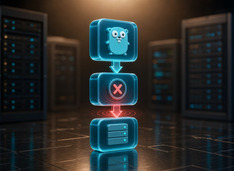
Handle errors at the right boundary.
Go error handling is easy to complain about. Every Go developer has written this code hundreds of times:
Handle errors at the right boundary.
Go error handling is easy to complain about. Every Go developer has written this code hundreds of times:
Stop sleeping in concurrent Go tests.
Testing concurrent Go code has always required a bit of discipline. Goroutines are cheap, channels are simple, and context cancellation is idiomatic — background workers and timers are everywhere in real Go services.
Build CQRS in Go without needless ceremony
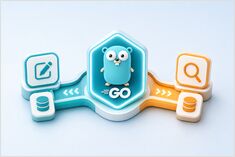
CQRS is one of those patterns that gets oversold, overcomplicated, and occasionally misdiagnosed as a cure for plain old CRUD boredom.
Turn Discord into a safe, interactive alert bus.
Discord becomes a serious integration surface when you treat it like one: a place where systems publish events, humans make decisions, and automation continues the workflow.
Slack is a workflow UI and alert delivery layer.
Slack integrations look deceptively easy because you can post a message in one HTTP call. The interesting part starts when you want Slack to be interactive and reliable.
Queryable JSON logs that connect to traces.
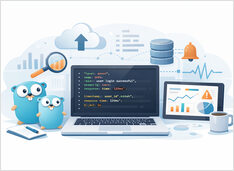
Logs are a debugging interface you can still use when the system is on fire. The problem is that plain text logs age poorly: as soon as you need filtering, aggregation, and alerting, you start parsing sentences.
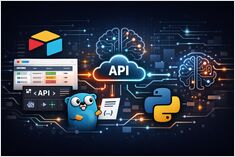
Airtable - Free plan limits, API, webhooks, Go & Python.
Airtable is best thought of as a low‑code application platform built around a collaborative “database-like” spreadsheet UI - excellent for rapidly creating operational tooling (internal trackers, lightweight CRMs, content pipelines, AI evaluation queues) where non-developers need a friendly interface, but developers also need an API surface for automation and integration.
Build workflows in Go with the Temporal SDK
Selenium, chromedp, Playwright, ZenRows - in Go.
Choosing the right browser automation stack and webscraping in Go affects speed, maintenance, and where your code runs.
Elm-style (Go) vs immediate-mode (Rust) TUI frameworks quickview
Two strong options for building terminal user interfaces today are BubbleTea (Go) and Ratatui (Rust). One gives you an opinionated, Elm-style framework; the other a flexible, immediate-mode library.
January 2026 trending Go repos
The Go ecosystem continues to thrive with innovative projects spanning AI tooling, self-hosted applications, and developer infrastructure. This overview analyzes the top trending Go repositories on GitHub this month.
Organize Go projects efficiently with modern workspaces
Managing Go projects effectively requires understanding how workspaces organize code, dependencies, and build environments.
Structure your Go projects for scalability and clarity
Structuring a Go project effectively is fundamental to long-term maintainability, team collaboration, and scalability. Unlike frameworks that enforce rigid directory layouts, Go embraces flexibility—but with that freedom comes the responsibility to choose patterns that serve your project’s specific needs.
Master DI patterns for testable Go code
Dependency injection (DI) is a fundamental design pattern that promotes clean, testable, and maintainable code in Go applications.
Speed up Go tests with parallel execution
Table-driven tests are the idiomatic Go approach for testing multiple scenarios efficiently.
When combined with parallel execution using t.Parallel(), you can dramatically reduce test suite runtime, especially for I/O-bound operations.
Build AI search agents with Go and Ollama
Ollama’s Web Search API lets you augment local LLMs with real-time web information. This guide shows you how to implement web search capabilities in Go, from simple API calls to full-featured search agents.