
AI Coding

gstack: AI Software Engineering Stack

gstack: AI Software Engineering Stack

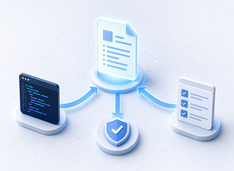
A software factory built from agent skills

AI coding agents can already write functions, modify repositories, run tests, and open pull requests. The harder problem is getting an agent to follow a repeatable engineering process before, during, and after the code is written.
Agent Skills vs MCP Servers: Decision Framework

Agent Skills vs MCP Servers: Decision Framework

Skill, MCP server, or both?

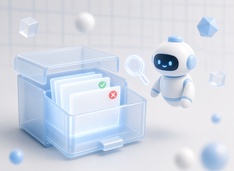
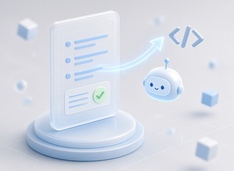
Agent Skills and MCP servers are often presented as competing ways to extend an AI agent. That framing is wrong: a skill teaches the agent how to work, while an MCP server gives it governed access to live capabilities.

Keeping Specs, Tests, And Code In Sync In AI Development

Keeping Specs, Tests, And Code In Sync In AI Development

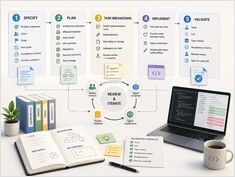
Stop AI agents drifting from specs, tests, and code.

AI coding agents ship features fast, but specs, tests, and code quietly drift apart. This guide covers a traceability model, spec-to-test and spec-to-code mapping, and the CI checks that catch drift before a merge.

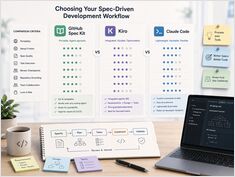
GitHub Spec Kit vs Kiro vs Claude Code SDD Workflows

GitHub Spec Kit vs Kiro vs Claude Code SDD Workflows

Process depth vs portability, not best tool.

Developers comparing Spec-Driven Development setups in 2026 are usually not asking which model is smartest. They are asking which workflow will keep an AI agent aligned without burying them in ceremony.

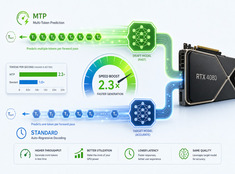
Speculative Decoding: 20-50% Faster LLM Inference

Speculative Decoding: 20-50% Faster LLM Inference

Faster LLM inference without quality loss - a practical guide

A 70B model generates one token per forward pass, and each pass reloads weights from VRAM, computes attention across the context, and synchronizes memory. Between tokens, the GPU sits idle while it waits for sequential dependencies to resolve.

Multi-Agent Orchestration Patterns: A Practical Guide

Multi-Agent Orchestration Patterns: A Practical Guide

40% of multi-agent pilots fail. Here's how to pick the right orchestration pattern - and avoid the ones that break.

Single-agent AI systems peaked in 2025 — you gave one LLM a prompt, some tools, and a goal, and it did reasonably well on bounded tasks.