
Selfhosting

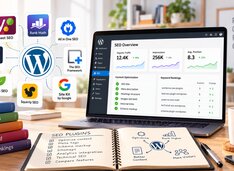
WordPress SEO Plugins Compared: Yoast to Local AI

WordPress SEO Plugins Compared: Yoast to Local AI

WordPress SEO plugins, Yoast to local AI

WordPress SEO plugins add the metadata, sitemaps, schema, and AI layer above WordPress core, and in 2026 that layer includes plugins that run inference on your own hardware.

Self-Hosted SEO Tools and Platforms: Open Source Guide

Self-Hosted SEO Tools and Platforms: Open Source Guide

Open-source SEO beyond WordPress plugins

Self-hosted SEO now covers crawlers, Search Console dashboards, rank trackers, MCP servers, and local AI. This guide compares the main open-source platforms and which features work without paid SEO APIs.

Self-Hosted Deep Research Systems: 12 Tools Compared

Self-Hosted Deep Research Systems: 12 Tools Compared

Self-hosted agents that research beyond search

Deep Research has become its own category of software, not just a model pointed at a search box. This article compares twelve self-hosted systems and the research architectures behind them.

Mnemosyne for Hermes Agent: Local Memory Quickstart

Mnemosyne for Hermes Agent: Local Memory Quickstart

Local Hermes memory with controlled writes.

Mnemosyne is a local-first memory provider for Hermes Agent, storing working memory, structured facts, temporal data, and episodic history in local SQLite — no hosted service, no mandatory network calls, and unusually granular write control.

Self-Reinforcing Memory Loops in AI Agents: Causes and Fixes

Self-Reinforcing Memory Loops in AI Agents: Causes and Fixes

When remembered conclusions become new evidence.

Persistent memory turns an agent from a re-explained tool into one that carries context forward — but it opens a failure mode stateless chat avoids: an interpretation can become memory, retrieved as fact, and justify a stronger version of itself.

How to Migrate from OpenClaw to Hermes Agent Safely

How to Migrate from OpenClaw to Hermes Agent Safely

A safe cutover beyond the one-line import

Migrating an AI assistant is not the same as copying an application config. The hard part is preserving identity, memory, tool behavior, scheduled work, and messaging access without two gateways acting as the same bot.

KV Cache on 16 GB GPUs: Making Long Context Actually Fit

KV Cache on 16 GB GPUs: Making Long Context Actually Fit

Why 128K context dies on 16 GB

A model can advertise a 128K context window and still fail at 40K tokens on a 16 GB GPU. The architecture ceiling never promised that weights, KV cache, compute buffers, and the desktop compositor would fit on your card at the same time.

Data Gravity: The Real Cost of API-First AI

Data Gravity: The Real Cost of API-First AI

Why your AI stack gets stickier every month.

Every API call feels like a simple transaction - until enough of them accumulate that your fine-tuning data, evaluation harnesses, and tool schemas are all shaped around one vendor, and switching stops being a routing change.

GPUs for AI in 2026: NVIDIA, AMD, Intel Compared

GPUs for AI in 2026: NVIDIA, AMD, Intel Compared

AI GPU comparison across three vendors

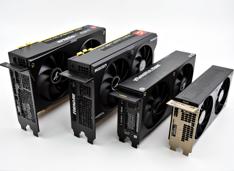
The AI hardware landscape has shifted significantly in 2026, with NVIDIA, AMD, and Intel all competing for developers who need GPUs capable of running local large language models and AI inference workloads.