Qwen 3.6 27B and 35B MTP vs Standard on 16GB GPU
MTP vs standard decoding on RTX 4080 — real benchmarks
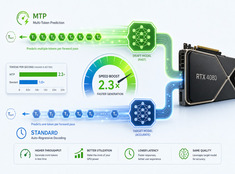
I tested Speculative decoding (Multi-Token Prediction, MTP) performance in Qwen 3.6 27B and 35B on an RTX 4080 with 16 GB VRAM.
MTP vs standard decoding on RTX 4080 — real benchmarks
I tested Speculative decoding (Multi-Token Prediction, MTP) performance in Qwen 3.6 27B and 35B on an RTX 4080 with 16 GB VRAM.

Free VRAM without killing llama-server.
llama.cpp router mode is one of the most useful changes to llama-server in years. It finally gives local LLM operators something close to the model management experience people expect from Ollama, while keeping the raw performance and low-level control that make llama.cpp worth using in the first place.

Agentic LLM tuning reference
This page is a practical reference for agentic LLM inference tuning (temperature, top_p, top_k, penalties, and how they interact in multi-step and tool-heavy workflows).

Serve and swap LLMs without restarts.
For a long time, llama.cpp had a glaring limitation:
you could only serve one model per process, and switching meant a restart.

llama.cpp token speed on 16 GB VRAM (tables).
Here I am comparing speed of several LLMs running on GPU with 16GB of VRAM, and choosing the best one for self-hosting.

Hot-swap local LLMs without changing clients.
Soon you are juggling vLLM, llama.cpp, and more—each stack on its own port. Everything downstream still wants one /v1 base URL; otherwise you keep shuffling ports, profiles, and one-off scripts. llama-swap is the /v1 proxy before those stacks.

OpenCode LLM test — coding and accuracy stats
I have tested how OpenCode works with several locally hosted on Ollama and llama.cpp LLMs, and for comparison added some Free models from OpenCode Zen.
Run GGUF models with the CLI and server
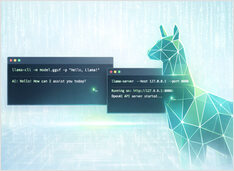
llama.cpp is a C/C++ inference engine for GGUF models: llama-cli for interactive chat, llama-completion for scripted prompts, and llama-server for an OpenAI-compatible HTTP API.