
OpenClaw Production Setup Patterns with Plugins and Skills
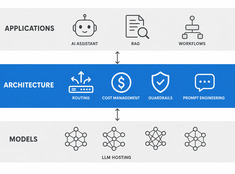
How real OpenClaw systems are actually structured
OpenClaw looks simple in demos. In production, it becomes a system.
How real OpenClaw systems are actually structured
OpenClaw looks simple in demos. In production, it becomes a system.
Claude subscriptions no longer power agents
The quiet loophole that powered a wave of agent experimentation is now closed.
Self-hosted AI search with local LLMs
Vane is one of the more pragmatic entries in the “AI search with citations” space: a self-hosted answering engine that mixes live web retrieval with local or cloud LLMs, while keeping the whole stack under your control.
Agentic coding, now with local model backends.
Claude Code is not autocomplete with better marketing. It is an agentic coding tool: it reads your codebase, edits files, runs commands, and integrates with your development tools.
Hermes Agent install and quickstart for devs
Hermes Agent is a self-hosted, model-agnostic AI assistant that runs on a local machine or low-cost VPS, works through terminal and messaging interfaces, and improves over time by turning repeated tasks into reusable skills.
Install TGI, ship fast, debug faster
Text Generation Inference (TGI) has a very specific energy. It is not the newest kid in the inference street, but it is the one that already learned how production breaks -
llama.cpp token speed on 16 GB VRAM (tables).
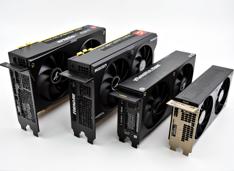
Here I am comparing speed of several LLMs running on GPU with 16GB of VRAM, and choosing the best one for self-hosting.
Compose-first Ollama server with GPU and persistence.
Ollama works great on bare metal. It gets even more interesting when you treat it like a service: a stable endpoint, pinned versions, persistent storage, and a GPU that is either available or it is not.
HTTPS Ollama without breaking streaming responses.
Running Ollama behind a reverse proxy is the simplest way to get HTTPS, optional access control, and predictable streaming behaviour.
Serve open models fast with SGLang.
SGLang is a high-performance serving framework for large language models and multimodal models, built to deliver low-latency and high-throughput inference across everything from a single GPU to distributed clusters.
Hot-swap local LLMs without changing clients.
Soon you are juggling vLLM, llama.cpp, and more—each stack on its own port. Everything downstream still wants one /v1 base URL; otherwise you keep shuffling ports, profiles, and one-off scripts. llama-swap is the /v1 proxy before those stacks.
Most local AI setups start with a model and a runtime.
What actually happens when you run Ultrawork.
Oh My Opencode promises a “virtual AI dev team” — Sisyphus orchestrating specialists, tasks running in parallel, and the magic ultrawork keyword activating all of it.
OpenCode LLM test — coding and accuracy stats
I have tested how OpenCode works with several locally hosted on Ollama and llama.cpp LLMs, and for comparison added some Free models from OpenCode Zen.
Meet Sisyphus and its specialist agent crew.
The biggest capability jump in OpenCode comes from specialised agents: deliberate separation of orchestration, planning, execution, and research.
OpenHands CLI QuickStart in minutes
OpenHands is an open-source, model-agnostic platform for AI-driven software development agents. It lets an agent behave more like a coding partner than a simple autocomplete tool.