
AI Systems: Self-Hosted Assistants, RAG, and Local Infrastructure
Most local AI setups start with a model and a runtime.
You download a quantized model, launch it through Ollama or another runtime, and begin prompting. For experimentation, this is more than enough. But once you move beyond curiosity — once you care about memory, retrieval quality, routing decisions, or cost awareness — the simplicity starts to show its limits.
This cluster explores a different approach: treating the AI assistant not as a single model invocation, but as a coordinated system.
That distinction may seem subtle at first, but it changes how you think about local AI entirely.
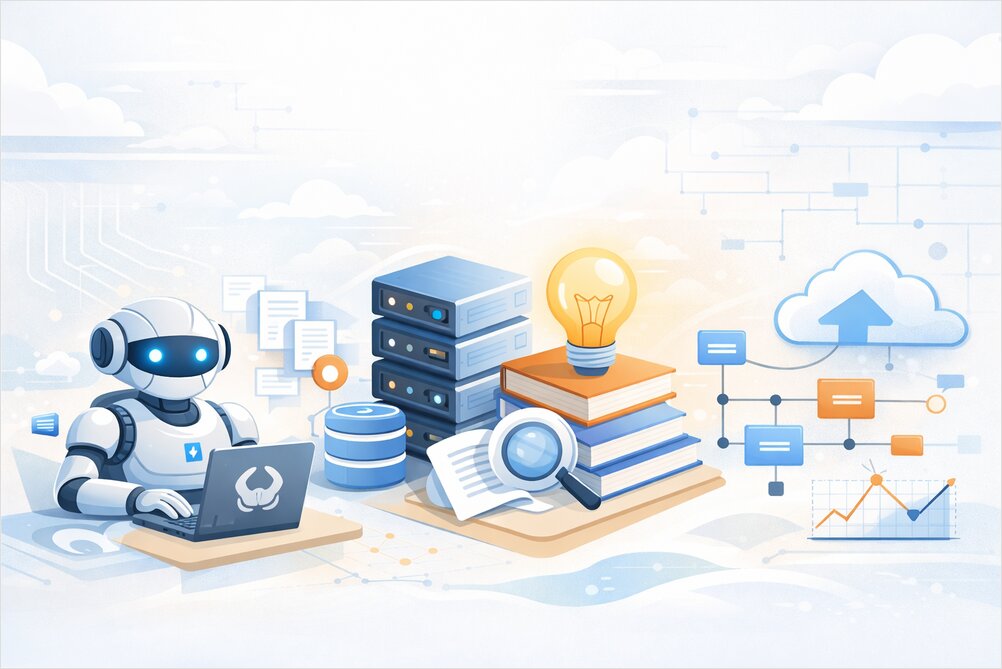
What Is an AI System?
An AI system is more than a model. It is an orchestration layer connecting inference, retrieval, memory, and execution into something that behaves like a coherent assistant.
Running a model locally is infrastructure work. Designing an assistant around that model is systems work.
If you have explored our broader guides on:
- LLM Hosting in 2026: Local, Self-Hosted & Cloud Infrastructure Compared
- Retrieval-Augmented Generation (RAG) Tutorial: Architecture, Implementation, and Production Guide
- LLM Performance in 2026: Benchmarks, Bottlenecks & Optimization
- Observability for AI Systems
you already know that inference is only one layer of the stack.
The AI Systems cluster sits on top of those layers. It does not replace them — it combines them.
OpenClaw: A Self-Hosted AI Assistant System
OpenClaw is an open-source, self-hosted AI assistant designed to operate across messaging platforms while running on local infrastructure.
At a practical level, it:
- Uses local LLM runtimes such as Ollama or vLLM
- Integrates retrieval over indexed documents
- Maintains memory beyond a single session
- Executes tools and automation tasks
- Can be instrumented and observed
- Operates within hardware constraints
It is not just a wrapper around a model. It is an orchestration layer connecting inference, retrieval, memory, and execution into something that behaves like a coherent assistant.
To run it locally and explore the setup yourself, see the OpenClaw quickstart guide, which walks through a Docker-based installation using either a local Ollama model or a cloud-based Claude configuration.
For a deeper architectural exploration of how OpenClaw differs from simpler local setups, read the OpenClaw system overview.
What Makes AI Systems Different
Several characteristics make AI systems worth examining more closely.
Model Routing as a Design Choice
Most local setups default to one model. AI systems support selecting models intentionally.
That introduces questions:
- Should small requests use smaller models?
- When does reasoning justify a larger context window?
- What is the cost difference per 1,000 tokens?
These questions connect directly to performance trade-offs discussed in the LLM performance guide and infrastructure decisions outlined in the LLM hosting guide.
AI systems surface those decisions instead of hiding them.
Retrieval Is Treated as an Evolving Component
AI systems integrate document retrieval, but not as a simplistic “embed and search” step.
They acknowledge:
- Chunk size affects recall and cost
- Hybrid search (BM25 + vector) may outperform pure dense retrieval
- Reranking improves relevance at the cost of latency
- Indexing strategy impacts memory consumption
These themes align with the deeper architectural considerations discussed in the RAG tutorial.
The difference is that AI systems embed retrieval into a living assistant rather than presenting it as an isolated demo.
Memory as Infrastructure
Stateless LLMs forget everything between sessions.
AI systems introduce persistent memory layers. That immediately raises design questions:
- What should be stored long-term?
- When should context be summarized?
- How do you prevent token explosion?
- How do you index memory efficiently?
Those questions intersect directly with data-layer considerations from the data infrastructure guide.
Memory stops being a feature and becomes a storage problem.
Observability Is Not Optional
Most local AI experiments stop at “it responds.”
AI systems make it possible to observe:
- Token usage
- Latency
- Hardware utilization
- Throughput patterns
This connects naturally with the monitoring principles described in the observability guide.
If AI runs on hardware, it should be measurable like any other workload.
What It Feels Like to Use
From the outside, an AI system may still look like a chat interface.
Under the surface, more happens.
If you ask it to summarize a technical report stored locally:
- It retrieves relevant document segments.
- It selects an appropriate model.
- It generates a response.
- It records token usage and latency.
- It updates persistent memory if necessary.
The visible interaction remains simple. The system behavior is layered.
That layered behavior is what differentiates a system from a demo.
Where AI Systems Fit in the Stack
The AI Systems cluster sits at the intersection of several infrastructure layers:
- LLM Hosting: The runtime layer where models execute (Ollama, vLLM, llama.cpp)
- RAG: The retrieval layer that provides context and grounding
- Performance: The measurement layer that tracks latency and throughput
- Observability: The monitoring layer that provides metrics and cost tracking
- Data Infrastructure: The storage layer that handles memory and indexing
Understanding that distinction is useful. Running it yourself makes the difference clearer.
For a minimal local installation with OpenClaw, see the OpenClaw quickstart guide, which walks through a Docker-based setup using either a local Ollama model or a cloud-based Claude configuration.
