
Jupyter Notebook Cheatsheet
Essential shortcuts and magic commands
Jumpstart the Jupyter Notebook productivity with essential shortcuts, magic commands, and workflow tips that will transform your data science and development experience.
Essential shortcuts and magic commands
Jumpstart the Jupyter Notebook productivity with essential shortcuts, magic commands, and workflow tips that will transform your data science and development experience.
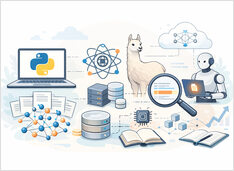
Build AI search agents with Python and Ollama
Ollama’s Python library now includes native OLlama web search capabilities. With just a few lines of code, you can augment your local LLMs with real-time information from the web, reducing hallucinations and improving accuracy.
Pick the right vector DB for your RAG stack
Choosing the right vector store can make or break your RAG application’s performance, cost, and scalability. This comprehensive comparison covers the most popular options in 2024-2025.
Master Python code quality with modern linting tools
Python linters are essential tools that analyze your code for errors, style issues, and potential bugs without executing it. They enforce coding standards, improve readability, and help teams maintain high-quality codebases.
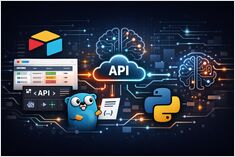
Build robust AI/ML pipelines with Go microservices
As AI and ML workloads become increasingly complex, the need for robust orchestration systems has become greater. Go’s simplicity, performance, and concurrency makes it an ideal choice for building the orchestration layer of ML pipelines, even when the models themselves are written in Python.
Unify text, images, and audio in shared embedding spaces
Cross-modal embeddings represent a breakthrough in artificial intelligence, enabling understanding and reasoning across different data types within a unified representation space.
Transform LaTeX documents to Markdown efficiently
Converting LaTeX documents to Markdown has become essential for modern publishing workflows, integrating static site generators, documentation platforms, and version control systems while maintaining readability and simplicity.
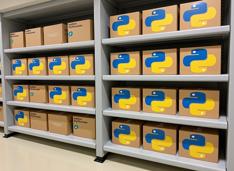
Master Python packaging from code to PyPI deployment
Python packaging has evolved significantly, with modern tools and standards making it easier than ever to distribute your code.
Deploy enterprise AI on budget hardware with open models
The democratization of AI is here. With open-source LLMs like Llama 3, Mixtral, and Qwen now rivaling proprietary models, teams can build powerful AI infrastructure using consumer hardware - slashing costs while maintaining complete control over data privacy and deployment.
Protect your privacy with advanced anti-fingerprinting
In the modern web, your digital identity can be tracked without cookies or explicit consent through sophisticated ditital fingerprinting techniques.
LongRAG, Self-RAG, GraphRAG - Next-gen techniques
Retrieval-Augmented Generation (RAG) has evolved far beyond simple vector similarity search. LongRAG, Self-RAG, and GraphRAG represent the cutting edge of these capabilities.
Build blazing-fast APIs with automatic docs and type safety
FastAPI has emerged as one of the most exciting Python web frameworks for building APIs, combining modern Python features with exceptional performance and developer experience.
Master Linux environment setup for data science work
Linux has become the de facto operating system for data science professionals, offering unmatched flexibility, performance, and a rich ecosystem of tools.
Build maintainable Python apps with SOLID design patterns
Clean Architecture has revolutionized how developers build scalable, maintainable applications by emphasizing separation of concerns and dependency management.
Speed-up FLUX.1-dev with GGUF quantization
FLUX.1-dev is a powerful text-to-image model that produces stunning results, but its 24GB+ memory requirement makes it challenging to run on many systems. GGUF quantization of FLUX.1-dev offers a solution, reducing memory usage by approximately 50% while maintaining excellent image quality.
AI model for augmenting images with text instructions
Black Forest Labs has released FLUX.1-Kontext-dev, an advanced image-to-image AI model that augments existing images using text instructions.