
LLM Self-Hosting and AI Sovereignty
Control data and models with self-hosted LLMs
Self-hosting LLMs keeps data, models, and inference under your control-a practical path to AI sovereignty for teams, enterprises, nations.
Control data and models with self-hosted LLMs
Self-hosting LLMs keeps data, models, and inference under your control-a practical path to AI sovereignty for teams, enterprises, nations.
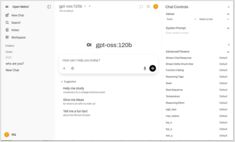
Self-hosted ChatGPT alternative for local LLMs
Open WebUI is a powerful, extensible, and feature-rich self-hosted web interface for interacting with large language models.
Fast LLM inference with OpenAI API
vLLM is a high-throughput, memory-efficient inference and serving engine for Large Language Models (LLMs) developed by UC Berkeley’s Sky Computing Lab.
Thoughts on LLMs for self-hosted Cognee
Choosing the Best LLM for Cognee demands balancing graph-building quality, hallucination rates, and hardware constraints. Cognee excels with larger, low-hallucination models (32B+) via Ollama but mid-size options work for lighter setups.
Master local LLM deployment with 12+ tools compared
Local deployment of LLMs has become increasingly popular as developers and organizations seek enhanced privacy, reduced latency, and greater control over their AI infrastructure.
Configure context sizes in Docker Model Runner with workarounds
Configuring context sizes in Docker Model Runner is more complex than it should be.
Enable GPU acceleration for Docker Model Runner with NVIDIA CUDA support
Docker Model Runner is Docker’s official tool for running AI models locally, but enabling NVidia GPU acceleration in Docker Model Runner requires specific configuration.
Quick reference for Docker Model Runner commands
Docker Model Runner (DMR) is Docker’s official solution for running AI models locally, introduced in April 2025. This cheatsheet provides a quick reference for all essential commands, configurations, and best practices.
Compare Docker Model Runner and Ollama for local LLM
Running large language models (LLMs) locally has become increasingly popular for privacy, cost control, and offline capabilities. The landscape shifted significantly in April 2025 when Docker introduced Docker Model Runner (DMR), its official solution for AI model deployment.
Integrate Ollama with Go: SDK guide, examples, and production best practices.
This guide provides a comprehensive overview of available Go SDKs for Ollama and compares their feature sets.
+ Specific Examples Using Thinking LLMs
In this post, we’ll explore two ways to connect your Python application to Ollama: 1. Via HTTP REST API; 2. Via the official Ollama Python library.
My view on current state of Ollama development
Ollama has quickly become one of the most popular tools for running LLMs locally. Its simple CLI, and streamlined model management have made it a go-to option for developers who want to work with AI models outside the cloud.
Quick overview of most prominent UIs for Ollama in 2025
Locally hosted Ollama allows to run large language models on your own machine, but using it via command-line isn’t user-friendly. Here are several open-source projects provide ChatGPT-style interfaces that connect to a local Ollama.
qwen3 8b, 14b and 30b, devstral 24b, mistral small 24b
In this test I’m comparing how different LLMs hosted on Ollama translate Hugo page in English to German.
Short list of LLM providers
Using LLMs is not very expensive, might be no need to buy new awesome GPU. Here is a list if LLM providers in the cloud with LLMs they host.
Comparing two deepseek-r1 models to two base ones
DeepSeek’s first-generation of reasoning models with comparable performance to OpenAI-o1, including six dense models distilled from DeepSeek-R1 based on Llama and Qwen.