
MinIO CE in 2026: Retired Upstream, Source-Only, and What to Use
MinIO CE is effectively end of life in 2026.
MinIO Community Edition is no longer a safe default for new production systems.
As of 2026, the public project status and distribution model changed enough that many teams now treat MinIO CE as end of life for serious workloads.
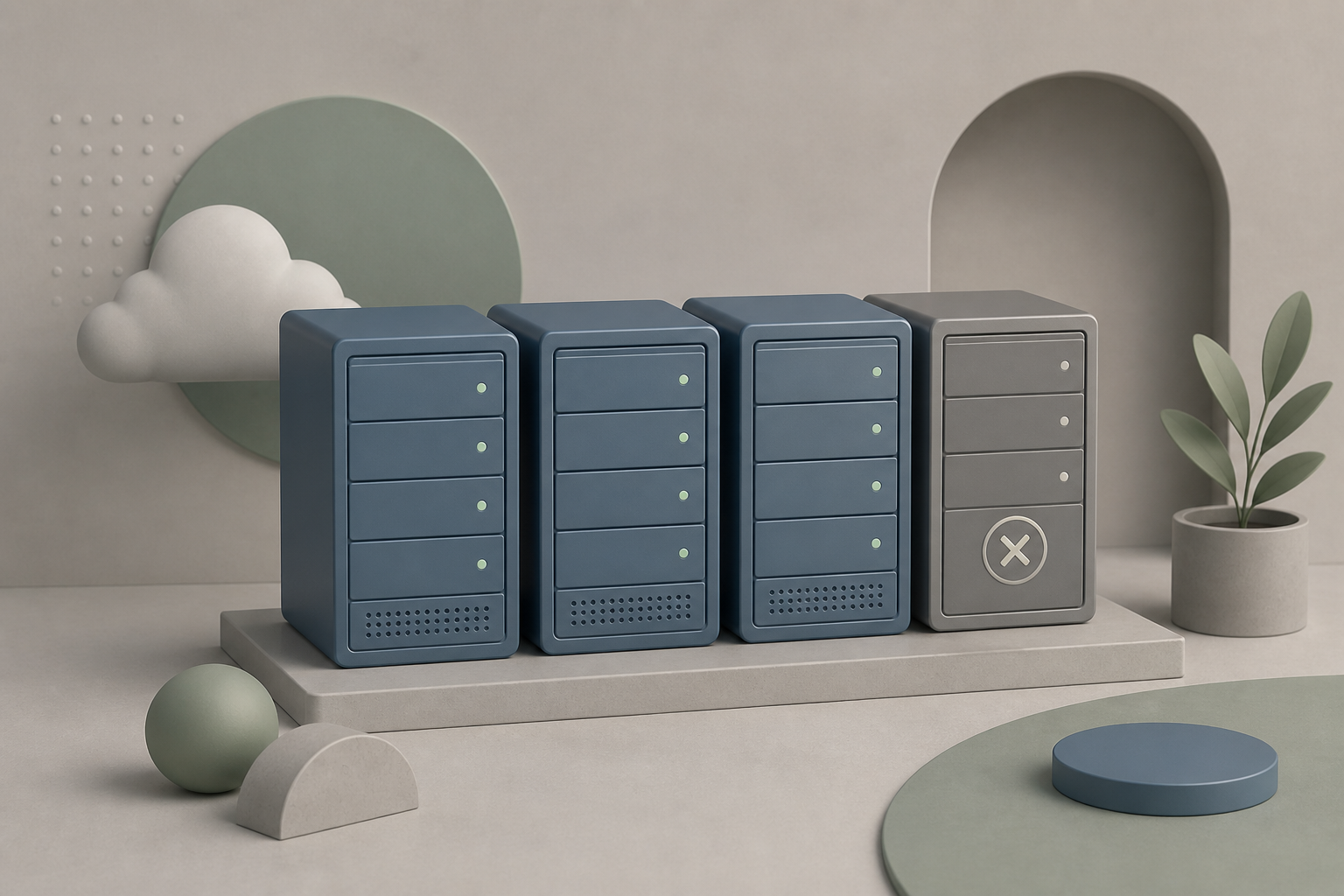
If you are deciding whether to keep MinIO CE, fork it, or migrate, this guide gives you:
- a factual timeline of what changed
- the practical risk for operators
- a technical comparison of SeaweedFS, Garage, RustFS, and Ceph RGW
- a migration plan you can execute in phases
For broader context around storage, databases, and search in production AI stacks, see the Data Infrastructure for AI Systems pillar.
What happened to MinIO CE
The community concern is not one single event. It is the sequence.
| Date | What changed | Why it matters |
|---|---|---|
| May 2025 | Key management features moved out of CE path | Reduced CE parity for auth and admin workflows |
| Oct 2025 | Community Docker images and public binaries stopped | Operators must build and verify from source |
| Dec 2025 | Public maintenance mode messaging became explicit | Fewer expectations for active OSS iteration |
| Feb 2026 | Repository archived for the first time | Read only state blocks normal OSS collaboration |
| Apr 2026 | Repository archived again and stayed locked | Confirms long term frozen upstream posture |
The core operational impact is simple
you inherit more supply chain, patching, and maintenance responsibility than most teams expect from a mainstream S3 compatible store.
Is MinIO still open source in 2026
A common question is whether MinIO is still open source at all.
The server code in the public repository is still under AGPLv3.
However, the practical community path changed from normal binary-first consumption to source-first self build.
For many teams, that feels less like a living OSS ecosystem and more like unsupported source availability.
So the accurate answer is nuanced
license status remains open source, but operationally the community experience is no longer what most platform teams need for low risk production adoption.
Is MinIO CE safe for new production deployments
For greenfield deployments, usually no, especially when compared with documented options in this MinIO vs Garage vs AWS S3 comparison.
Why the risk profile changed
- Patch cadence risk
no stable, trusted community binary channel means every CVE cycle becomes your build and release cycle - Verification burden
your team must own provenance, repeatability, and rollback strategy - Ecosystem drift risk
tooling that assumed public images may lag or break - People risk
senior SRE and security time is consumed by platform plumbing instead of product work
If you already run MinIO CE internally, this does not mean panic shutdown.
It means treat the platform as controlled technical debt and put a migration runway on your roadmap.
Community verdict and market response
Across operator communities in 2025 to 2026, the pattern is consistent:
- fewer teams choose MinIO CE for net new deployments
- more teams evaluate Garage and SeaweedFS first
- enterprise teams with strict S3 semantics often move toward Ceph RGW
- RustFS gets attention as a direct successor style option, but with alpha caution
This trend matters because platform safety is partly social
healthy ecosystems reduce integration risk, improve troubleshooting velocity, and widen hiring pools.
Best alternatives to MinIO CE
SeaweedFS
SeaweedFS is a strong option when you care about huge object counts, small file behavior, and practical efficiency in commodity environments.
Choose SeaweedFS when
- you need high small-object density
- you prefer Apache 2.0 governance and licensing clarity
- you want production readiness without the heavy footprint of Ceph
Garage
Garage is attractive for lightweight self-hosted clusters, edge nodes, and geo distributed deployments on modest hardware.
If you want a concrete setup path, use this Garage S3 quickstart to validate replication and operations before migration.
Choose Garage when
- resource efficiency matters more than full S3 feature parity
- you run mixed ARM or small node environments
- you want simple operations over maximal feature surface
RustFS
RustFS is frequently discussed as the closest successor narrative to MinIO style deployment and UX.
Choose RustFS when
- you accept alpha-stage software risk
- you can test deeply before production
- you want to track a fast moving project with potential upside
For regulated or high uptime systems, keep RustFS in pilot until maturity is proven in your own reliability tests.
Ceph RGW
Ceph RGW remains the enterprise heavyweight with broad capability and scale.
Choose Ceph RGW when
- you need mature enterprise S3 behavior
- your team already has Ceph operational expertise
- you can support higher infrastructure and on-call complexity
Which object store is best for your use case
Use this pragmatic filter:
- Small team and low ops budget
start with Garage or SeaweedFS - Large enterprise and strict compatibility needs
prefer Ceph RGW - Experimental migration from MinIO style workflows
pilot RustFS, but keep rollback options
No option is universally best.
The correct target depends on required S3 features, RPO and RTO goals, team maturity, and how much platform ownership you want.
If your team still needs legacy MinIO background before deciding, this MinIO vs AWS S3 overview and this MinIO command cheatsheet help with current-state audits.
Migration plan from MinIO CE
If you are currently on MinIO CE, this phased approach avoids risky big-bang moves.
Phase 1 inventory and risk scoring
- list buckets, object counts, and growth rates
- classify workloads by criticality and recovery objectives
- identify hard S3 dependencies such as versioning, object lock, or policy behavior
Phase 2 proof of compatibility
- stand up one or two candidate platforms
- replay representative read and write workloads
- verify auth, lifecycle rules, retention behavior, and SDK edge cases
Plan to instrument your pilot from day one with metrics and alerts from the Observability pillar so migration regressions are measurable rather than anecdotal.
Phase 3 pilot cutover
- migrate one low blast radius workload first
- run dual read validation where possible
- measure latency, error rates, and operational overhead
Phase 4 production migration
- migrate high priority internet facing workloads first
- keep rollback artifacts and retention windows
- document final runbooks before decommissioning MinIO CE paths
Bottom line
MinIO CE may still run, but it is no longer the low-friction default for new production object storage.
Treat current clusters as transition infrastructure, not a long horizon foundation.
For most teams in 2026, safer direction is:
- SeaweedFS or Garage for pragmatic self hosted deployments
- Ceph RGW for enterprise scale and mature S3 requirements
- RustFS for monitored pilot environments only
Make the migration decision early while you can still choose your timeline instead of reacting to the next forced change.
