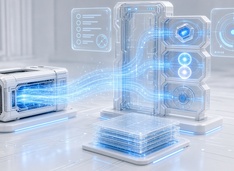
KV Cache on 16 GB GPUs: Making Long Context Actually Fit

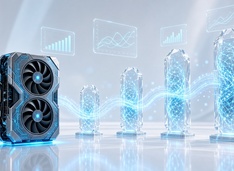
KV Cache on 16 GB GPUs: Making Long Context Actually Fit

Why 128K context dies on 16 GB

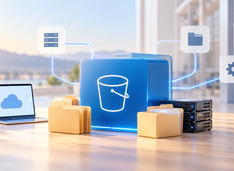
A model can advertise a 128K context window and still fail at 40K tokens on a 16 GB GPU. The architecture ceiling never promised that weights, KV cache, compute buffers, and the desktop compositor would fit on your card at the same time.

Agent Skills vs MCP Servers: Decision Framework

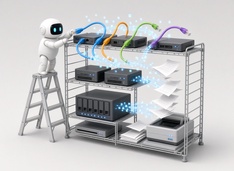
Agent Skills vs MCP Servers: Decision Framework

Skill, MCP server, or both?

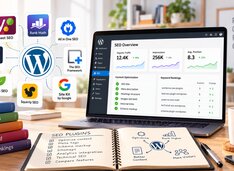
Agent Skills and MCP servers are often presented as competing ways to extend an AI agent. That framing is wrong: a skill teaches the agent how to work, while an MCP server gives it governed access to live capabilities.

Data Gravity: The Real Cost of API-First AI

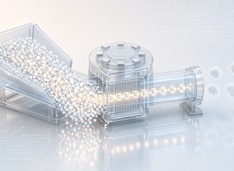
Data Gravity: The Real Cost of API-First AI

Why your AI stack gets stickier every month.

Every API call feels like a simple transaction - until enough of them accumulate that your fine-tuning data, evaluation harnesses, and tool schemas are all shaped around one vendor, and switching stops being a routing change.

Ollama to vLLM: When to Migrate Your Local LLM Server

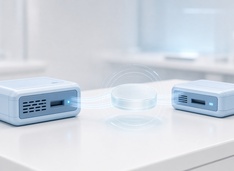
Ollama to vLLM: When to Migrate Your Local LLM Server

When to move from Ollama to vLLM

Ollama is one of the easiest ways to run a local language model, but convenience can conceal the moment when a local experiment becomes a shared inference service that needs better scheduling and observability.

Keeping Specs, Tests, And Code In Sync In AI Development

Keeping Specs, Tests, And Code In Sync In AI Development

Stop AI agents drifting from specs, tests, and code.

AI coding agents ship features fast, but specs, tests, and code quietly drift apart. This guide covers a traceability model, spec-to-test and spec-to-code mapping, and the CI checks that catch drift before a merge.

Circuit Breaker Pattern in Go: Stop Cascading Failures

Circuit Breaker Pattern in Go: Stop Cascading Failures

Stop cascading failures in Go microservices.

A circuit breaker stops your Go service from hammering a failing dependency, preventing cascading failures that consume goroutines, sockets, and memory until the entire system collapses.

Podman Quadlet vs Docker Compose for Linux Services

Podman Quadlet vs Docker Compose for Linux Services

Choose the right container workflow.

Docker Compose and Podman Quadlet solve overlapping problems but come from different design centers, and choosing between them depends on whether you think in application stacks or Linux services.

Subscribe

Get new posts on AI systems, Infrastructure, and AI engineering.